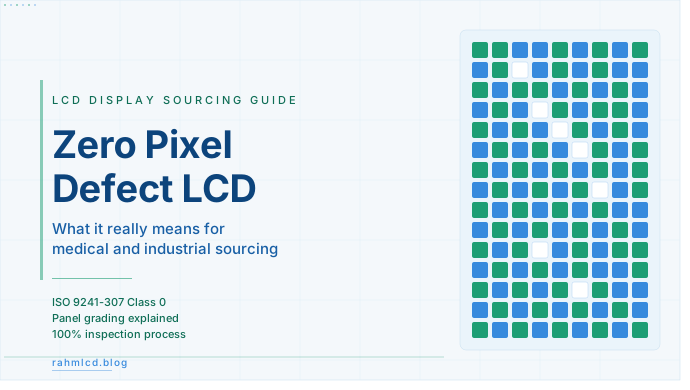
Zero pixel defect is one of the most misunderstood claims in display sourcing. Here is what the standard actually says, where the real work happens in the supply chain, and what you should ask your module supplier before placing an order.
What Counts as a Pixel Defect
A zero pixel defect display is one where no pixel fails to change state correctly during normal operation. There are three defect types that fall under this standard, each with a different cause and visual signature.
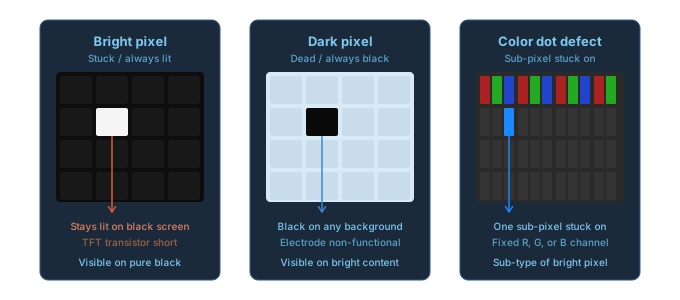
Stuck / Bright Pixel
Displays as white or a fixed color (red, green, or blue) on an all-black screen. Caused by a TFT transistor short that keeps the pixel permanently charged.
Dead / Dark Pixel
Appears as a black dot on any bright background. The transistor or electrode is completely non-functional, so the liquid crystal never responds to voltage.
Color Dot Defect
A sub-pixel is stuck at one channel (R, G, or B). The result is a persistent colored dot. This is technically a sub-category of bright pixel defect.
In practice, bright pixels and color dots are the most common complaint in medical applications because they are visible against the dark backgrounds used in diagnostic imaging. Dark pixels are harder to see but equally disqualifying for surgical or clinical environments.
What ISO 9241-307 Class 0 Actually Says
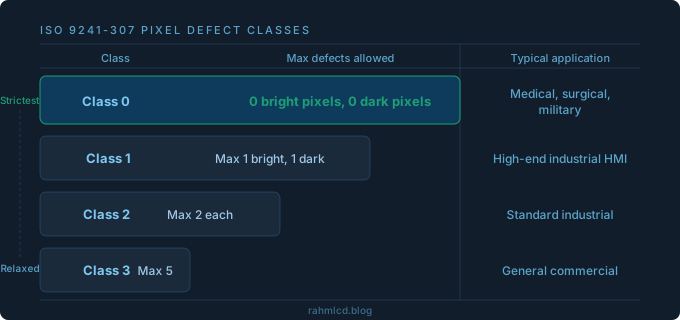
ISO 9241-307 is the international standard that defines pixel defect classes for flat panel displays. Class 0 is the strictest tier and the basis for most zero pixel defect claims, but it does not mean zero physical defects exist in every unit. It means the panel meets a defined acceptance threshold under specified inspection conditions, including viewing distance, ambient light, and test patterns.
| Class | Max Bright Pixels | Max Dark Pixels | Typical Application |
|---|---|---|---|
| Class 0 | 0 | 0 | Medical, surgical, military |
| Class 1 | 1 | 1 | High-end industrial HMI |
| Class 2 | 2 | 2 | Standard industrial |
| Class 3 | 5 | 5 | General commercial |
In standard display sourcing, “zero pixel defect” is a marketing term. Panel fabs grade their output into A, B, and C tiers, and even A-grade panels carry a small allowance for sub-pixel variation. What Class 0 delivery actually means in practice is that every unit shipped has been individually inspected and confirmed defect-free at the module level, not that the panel substrate is physically perfect.
Where the Work Happens: Panel Fab vs. Module Assembler
At the panel fabrication level
Panel fabs use laser repair equipment to address defects before grading. The three main methods are NRP repair (laser cutting and welding at the TFT layer to isolate a shorted transistor), BM repair (diffusing black matrix material over the defect site), and DM repair (carbonizing the color filter or ITO layer directly). After laser repair, a formerly bright pixel is darkened to a visually undetectable state. This is how fabs achieve the low defect counts that make zero pixel defect module delivery possible downstream. Panels are then graded and sold accordingly.
This process happens entirely at the glass level. Module assemblers do not have access to this step and do not operate laser repair equipment.
At the module assembly level
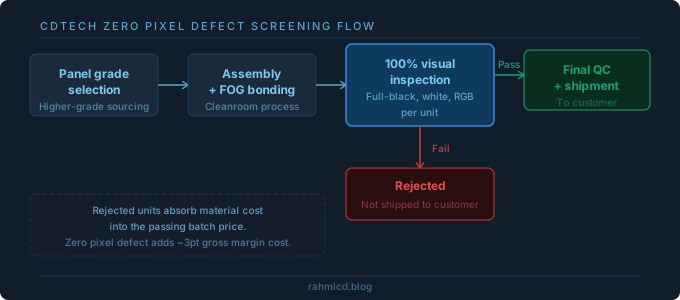
Once a panel arrives at a module assembler, the glass has already been graded. The module assembler’s role is to source the appropriate panel grade and then screen finished modules after assembly for zero pixel defect compliance. At CDTECH, the inspection step takes place after FOG (Film on Glass) bonding, which is the final bonding stage before the module is complete. At this point, the assembled module is tested under full-black and full-white test patterns. Any unit showing a visible bright, dark, or color pixel is pulled from the batch.
This is a yield-based screening process. It is not repair. Units that pass the zero pixel defect check are shipped; units that fail are rejected. The result for the customer is a batch with no visible pixel defects, but the cost of achieving this is higher because the rejection rate increases the effective cost per passing unit.
How We Screen for Zero Pixel Defect Delivery
Panel grade selection
Medical and high-end industrial orders use higher-grade panels sourced specifically for low defect density. This reduces the rejection rate at the inspection stage and keeps the overall cost manageable.
Module assembly and FOG bonding
The panel is assembled with backlight, FPC, and optional touch layer under controlled cleanroom conditions. Contamination at this stage can introduce additional defects, so environment control matters.
100% visual inspection after FOG
Every module is powered on and tested against full-black, full-white, red, green, and blue test patterns. This is the core of our zero pixel defect screening: bright pixels, dark pixels, and color dot defects are all checked per unit. Any module with a visible defect is rejected from the shipment batch.
Final QC and documentation
Units that pass the zero pixel defect check are logged and packed. For medical customers requiring ISO 13485-aligned documentation, inspection records are available on request.
What Zero Pixel Defect Delivery Costs
Customers sometimes ask why zero pixel defect costs more than a standard order when “it is just a quality check.” The reason is yield. If a batch of 1,000 modules produces 30 units with visible defects, those 30 units are scrapped or downgraded. Their material and labor cost is absorbed into the remaining 970 units. The higher the defect standard, the more units are potentially rejected, and the more that rejection cost is distributed across the batch.
For reference, a zero pixel defect requirement typically increases gross margin cost by at least 3 percentage points compared to a standard A-grade module order. The exact figure depends on panel size, resolution, and the defect density of the panel batch.
If your application genuinely requires a zero pixel defect LCD module, such as a surgical display, medical imaging monitor, or a cockpit HMI with strict visual certification requirements, this cost is justified and necessary. If your application can tolerate Class 1 or Class 2, specifying zero pixel defect adds cost without a corresponding functional benefit.
Applications That Genuinely Need Class 0 Zero Pixel Defect
Not every medical or industrial display actually requires a zero pixel defect specification. The decision should be based on how the display is used and what the consequences of a missed defect are. For a broader overview of medical display standards, the Medical Imaging display market continues to drive adoption of stricter panel grading requirements globally.
Applications where zero pixel defect is a real requirement include surgical and endoscopic displays where a single bright pixel could be misread as tissue detail, diagnostic imaging workstations where radiologists examine high-contrast scans, patient monitoring displays in ICU environments where any anomaly must be immediately visible, and military or aviation HMI panels where display integrity is part of functional safety certification.
Applications where Class 1 or Class 2 is usually sufficient include general industrial HMI panels, warehouse management terminals, test and measurement instrument displays, and most smart home or building automation panels. For these, specifying zero pixel defect raises cost unnecessarily.
If you are unsure which class applies to your project, the most practical approach is to state your application and end-use environment when requesting a quote. A supplier who understands the use case can recommend the appropriate zero pixel defect inspection level without over-specifying.
What to Ask Your Module Supplier About Zero Pixel Defect
Before placing an order with a zero pixel defect requirement, it is worth confirming a few things directly with your supplier:
First, ask which panel grade is used as the base for this order. A supplier using standard commercial-grade panels and claiming zero pixel defect delivery is relying entirely on post-assembly screening, which increases yield loss and cost. Using a higher base panel grade reduces rejection risk.
Second, ask whether the inspection is 100% per unit or sample-based. A zero pixel defect guarantee only means something if every unit in the batch is individually tested, not just a statistical sample.
Third, ask whether inspection records are available. For regulated industries, traceability matters. If a display fails in the field, you need to be able to confirm it passed QC at the module level.
At CDTECH, we perform 100% unit inspection after FOG bonding for all medical and zero-pixel-defect-specified orders. Panel grade selection and inspection scope are confirmed at the quotation stage. If you have a project requiring Class 0 delivery, contact us at [email protected] with your display size, resolution, and application details.
Frequently Asked Questions
What is the difference between a bright pixel, dark pixel, and color dot defect?
A bright pixel (also called a stuck pixel) stays lit on a black screen, appearing white or a fixed color. A dark pixel (dead pixel) stays black on any bright background because the transistor is fully non-functional. A color dot defect is a sub-pixel stuck at one channel, red, green, or blue, producing a persistent colored dot. All three types are counted under zero pixel defect screening.
Does “zero pixel defect” mean the panel has no physical defects at all?
No. “Zero pixel defect” in most commercial contexts is a marketing term. Even ISO 9241-307 Class 0 defines an acceptance threshold under specific inspection conditions, not a guarantee of a physically perfect substrate. In practice, Class 0 delivery means every unit has been individually inspected and confirmed free of visible defects at the module level before shipment.
Can a module assembler repair pixel defects, or is that only done at the panel fab?
Laser repair of pixel defects (NRP, BM, and DM methods) is performed at the panel fabrication stage, before the glass is shipped to a module assembler. Module assemblers do not operate laser repair equipment. What a module assembler can do is screen finished modules after assembly and reject any unit with a visible defect before it reaches the customer.
Why does zero pixel defect delivery cost more than a standard order?
The cost increase comes from yield loss. Any module that fails the pixel defect inspection is rejected from the batch. The material and labor cost of those rejected units is absorbed into the price of the passing units. Depending on panel size and defect density, a zero pixel defect requirement typically adds at least 3 percentage points to gross margin cost compared to a standard A-grade order.
Which applications actually need Class 0, and which can use a lower grade?
Class 0 is justified for surgical displays, diagnostic imaging monitors, ICU patient monitors, and aviation or military HMI panels where display integrity is part of functional safety. For general industrial HMI, warehouse terminals, test equipment, and smart home panels, Class 1 or Class 2 is usually sufficient. Over-specifying pixel defect class adds cost without a functional benefit for these applications.
What should I check when ordering a zero pixel defect LCD module?
Confirm three things with your supplier: first, which panel grade is used as the base (higher-grade panels reduce rejection risk); second, whether inspection is 100% per unit or sample-based (only 100% per-unit inspection is meaningful for Class 0); and third, whether inspection records are available for traceability in regulated industries.
Related Articles
Get a Quote
Sourcing a Medical or High-Reliability LCD Module?
Tell us your display size, resolution, application, and pixel defect requirement. We will confirm the panel grade, inspection scope, and cost impact at the quotation stage.

 English
  Español
  日本語
日本語  한국어
한국어
Leave a Reply