Medical device display selection differs from industrial or consumer electronics in one important way: supplier qualification comes before product specification. A module that meets every technical requirement but comes from a supplier without the right quality management certifications may not be eligible for use in a medical device at all. The technical evaluation is the second step. The supplier audit is the first.
This article covers what matters when selecting LCD modules for medical applications, from supplier qualifications through touch panel selection, custom sizing, and the project timelines that catch engineers off guard. For a general overview of TFT LCD module types and configuration options, see our complete TFT LCD module guide.
Application types and display requirements
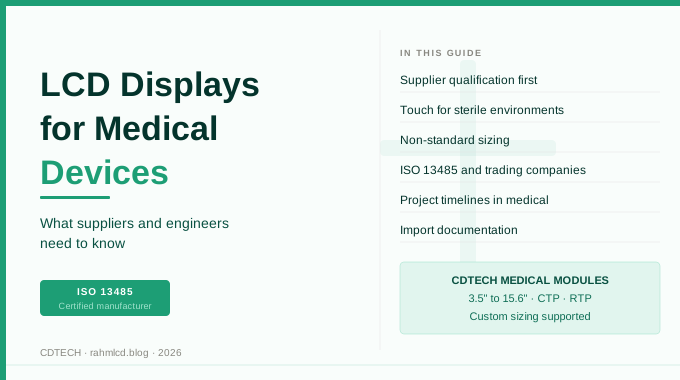
Medical devices span a wide range of form factors and use environments. The display requirements follow the application more closely than in most other industries.
| Application | Typical size | Interface | Key requirement |
|---|---|---|---|
| Bedside patient monitor | 7″ to 10.1″ | LVDS · HDMI | Wide viewing angle, touch for bare hands |
| Surgical and diagnostic equipment | 10.1″ and above | LVDS · HDMI | High resolution, glove or sterile touch |
| Infusion pump, small therapy device | 5″ to 7″ | RGB · MIPI · LVDS | Non-standard active area common |
| Home care device | 3.5″ to 5″ | RGB · SPI · MIPI | Cost-sensitive, simple UI |
| Ambulance and mobile medical | 3.5″ to 7″ | RGB · LVDS | Vibration, wide temperature range |
One pattern that comes up frequently: medical devices in the infusion pump and small therapy device category often require non-standard active area dimensions. The device enclosure is designed around the clinical workflow, and the display needs to fit within that enclosure rather than the other way around. A 6.75 inch display or a 5.7 inch LVDS module are not unusual requests in this segment.
Touch panel selection: bedside versus sterile environments
The choice between capacitive and resistive touch in medical applications is driven almost entirely by the use environment and the operator’s hands.
Bedside and general clinical use
Nurses and clinicians operating bedside monitors and patient management systems work with bare hands or thin examination gloves. Projected capacitive touch is the right default here. It provides multi-touch support, fast response, and a durable glass surface that handles frequent cleaning and disinfection well. PCAP controllers can be configured for thin glove sensitivity without significant tradeoffs in normal operation.
Surgical and sterile field environments
Equipment used inside or adjacent to sterile fields presents a different challenge. Operators may be wearing thick surgical gloves, or interacting with the display through a sterile drape. Standard PCAP does not register these inputs reliably. Two approaches apply: configuring the PCAP controller for maximum sensitivity glove mode, which works for thick but not completely non-conductive inputs, or specifying resistive touch, which responds to any physical pressure regardless of input type.
The decision depends on how and where the device is used. A device that moves between bedside and procedure room use may need to support both scenarios, which is a case for PCAP with well-tuned glove mode rather than resistive. A device used exclusively in sterile conditions with heavy gloves may be better served by resistive. Our guide on capacitive vs resistive touch panels covers the full comparison.
Non-standard sizing is common in medical device development
Medical device enclosures are designed around clinical function, not around standard display sizes. A patient monitor housing is dimensioned for wall mounting, bedside rail attachment, and a specific viewing angle. An infusion pump housing is sized for pole mounting and one-handed operation. Neither is designed around a 7 inch or 10.1 inch standard panel.
This means non-standard active area requests are more common in medical than in almost any other segment. A display module supplier that can only offer catalogue sizes is limited in what it can support. The ability to develop a custom active area, modify the FPC exit direction, or adjust the backlight configuration to fit a specific enclosure is a practical requirement rather than a nice-to-have.
The cost structure for custom medical display modules follows the same pattern as other industries: NRE covers the tooling for custom components, unit cost is determined at production volume, and sample lead time from drawing confirmation typically runs four to six weeks for minor modifications. For a full breakdown of what custom LCD development involves, see our guide on custom LCD display OEM evaluation.
Supplier qualification: why it comes before product specification
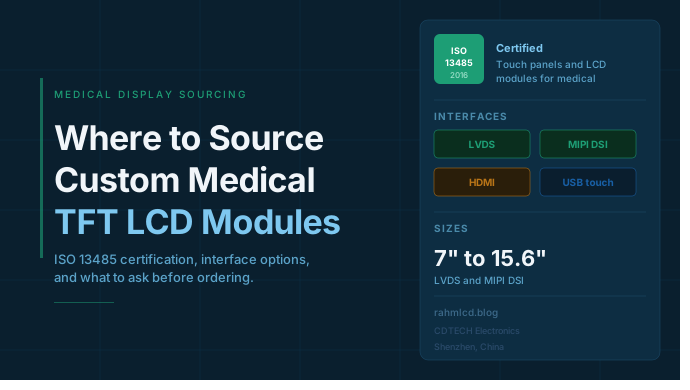
ISO 13485 is the international standard for quality management systems in medical device manufacturing. A supplier holding this certification has had its production processes, quality controls, and documentation traceability audited against requirements specifically designed for the medical device supply chain.
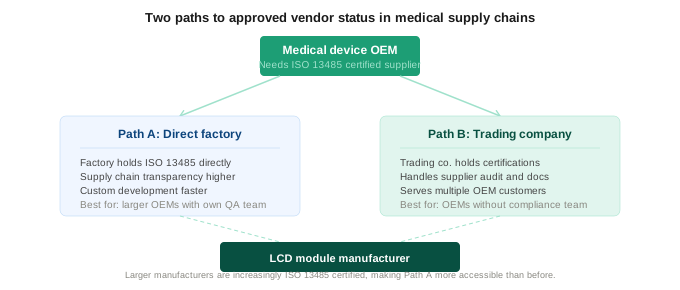
For many medical device OEMs, ISO 13485 certification is a prerequisite for supplier approval. A module that passes every technical test but comes from a non-certified supplier cannot enter the approved vendor list. This makes supplier qualification genuinely the first step in medical display selection, not a formality to address later.
The role of trading companies in medical supply chains
Medical device procurement often goes through trading companies rather than directly to module manufacturers. This is not simply a commercial preference. Trading companies that serve multiple medical device customers often build up compliance infrastructure, supplier audit capability, and documentation management systems that match or exceed what a single manufacturer maintains. For a medical device OEM without dedicated supply chain compliance resources, a qualified trading company can handle both supplier qualification and regulatory documentation in one relationship.
This dynamic is changing. Larger module manufacturers are increasingly building their own quality management systems to meet medical-grade supply requirements directly. ISO 13485 certification at the factory level is part of this shift. The practical result is that both paths, through a qualified trading company or directly with a certified manufacturer, can satisfy medical supply chain requirements. The right choice depends on the customer’s own compliance capability and the complexity of the project.
CDTECH holds ISO 13485 certification and can support the supplier audit process directly for medical device customers.
Project timelines in medical device development
Medical device development cycles are long by nature. Regulatory approval processes, clinical validation requirements, and multi-stakeholder decision chains all extend the time from first sample to production. A display module that enters the design process in early 2024 may not reach production volume until 2026 or later. This is not a failure of the project. It is the normal pace of medical device development.
For display module suppliers, this has a practical implication: the quality of technical support during the engineering phase matters more than in faster-moving industries. An engineer integrating a display module into a medical device prototype may need help with initialization sequences, connector pinout clarification, or backlight control configuration. A supplier that responds quickly and accurately during this phase builds a relationship that persists through the two-year development cycle. A supplier that is hard to reach during engineering validation may lose the project before production volume is ever discussed.
Documentation and import requirements
Medical device components face more complex import documentation requirements than general electronics in many markets. Customs classification, material declarations, and regulatory compliance documents are frequently required before goods can clear import inspection.
Suppliers who can provide accurate HS codes, RoHS and REACH declarations, material composition lists, and product descriptions aligned with the importing country’s regulatory requirements reduce the friction in the logistics process significantly. For medical device customers importing into markets with strict medical device regulations, this documentation capability is part of what supplier qualification means in practice.
What to confirm before selecting a medical display module supplier
- Does the supplier hold ISO 13485 certification, and can they support your supplier audit process?
- Can the supplier support non-standard active area dimensions if your enclosure requires it?
- What touch panel options are available, and can the controller be configured for glove mode or sterile field operation?
- What documentation can the supplier provide: RoHS declarations, material composition, HS code confirmation?
- How does the supplier handle technical support during the engineering phase, and what is their typical response time for integration questions?
- What is the expected production lifecycle of the module? Medical devices have long field lives, and EOL risk is real. See our guide on LCD display EOL replacement for what to plan for.
Working on a medical device display specification? Share the application, display size, touch requirement, and any supplier qualification requirements. We can confirm module availability and what certification documentation we can provide. Contact us here.

 English
  Español
  日本語
日本語  한국어
한국어
Leave a Reply