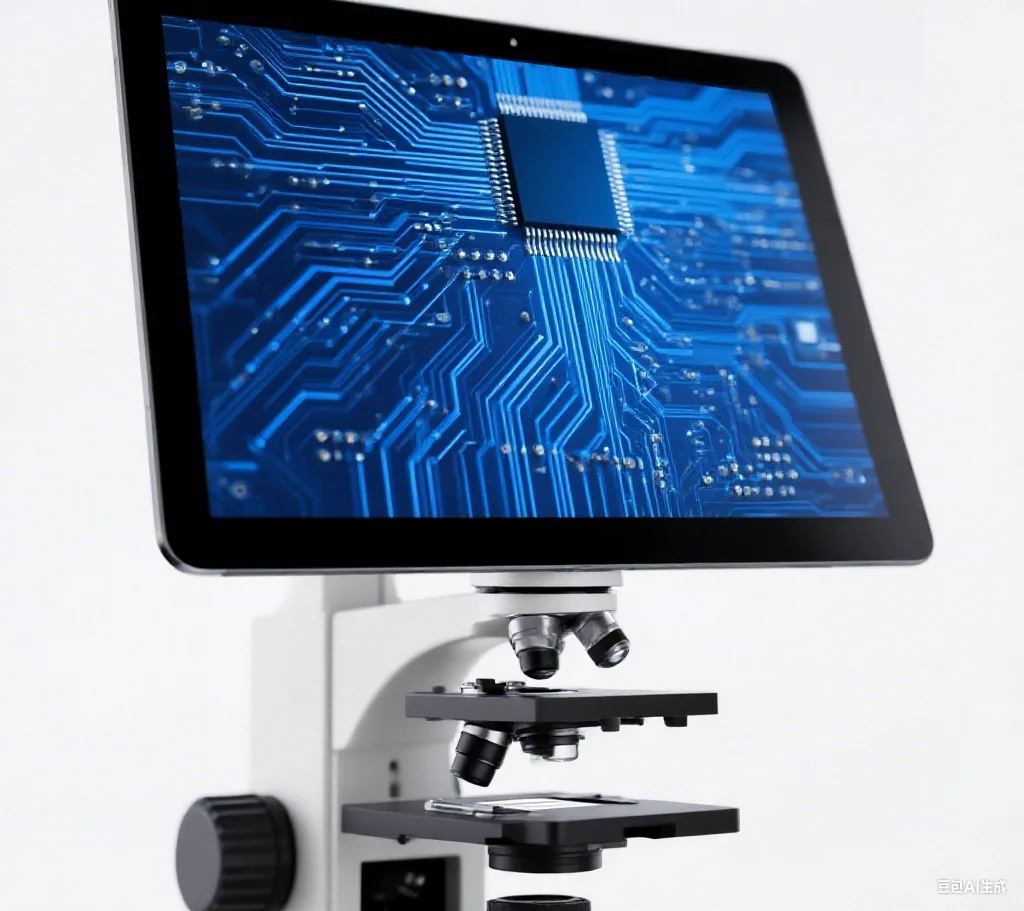
Why do so many engineers online complain that digital microscopes feel laggy or unclear, even if they are convenient? The answer often lies not in the optics, but in the LCD module. The display determines how clear, responsive, and professional the experience feels, impacting both usability and productivity.
What Users Really Say about Digital Microscopes with LCD
Feedback from electronics engineers and hobbyists highlights recurring issues:
- Laggy performance – USB microscopes are often very slow, making real-time work frustrating.
- Small screens – Compact 4.3 inch microscopes are portable but lack clarity for detailed inspection.
- Professional HDMI setups – Reduce lag but are costly and still have limitations such as mismatched focus or reduced field of view.
- Color accuracy concerns – Poor color reproduction affects sample observation accuracy, especially in quality control and medical applications.
- Limited viewing angles – Traditional TN panels restrict collaborative work when multiple users need to view the same sample.
- Screen reflections – Glossy displays create glare problems in bright laboratory environments.
This shows that the LCD display is not just a minor component, it defines usability, comfort, and accuracy.
Why the Display Matters for Digital Microscopes
From user feedback, it’s clear that the display defines whether a microscope feels professional or not.
| Common Pain Point | LCD Factor that Solves It |
| Image lag | Refresh rate + response time |
| Poor clarity | Resolution + screen size |
| Color accuracy | NTSC color gamut coverage |
| Limited viewing angles | IPS technology + full viewing angles |
| Expensive upgrades | Affordable TFT-LCD module options |
| Interface limitations | RGB/MIPI/LVDS high-speed transmission |
By choosing the right LCD module, manufacturers can build microscopes that are smooth, sharp, and reliable, without unnecessary complexity or cost.
Recommended LCD Modules for Microscopes
Based on our experience as an LCD module supplier, we recommend three sizes that cover different use cases:
S043HWV94ES – 4.3 inch WVGA This compact display module offers a resolution of 800×480 with high brightness of 1000 cd/m². With RGB interface and wide operating temperature range (-30 to 85°C), it provides excellent portability for entry-level microscopes where mobility matters most.
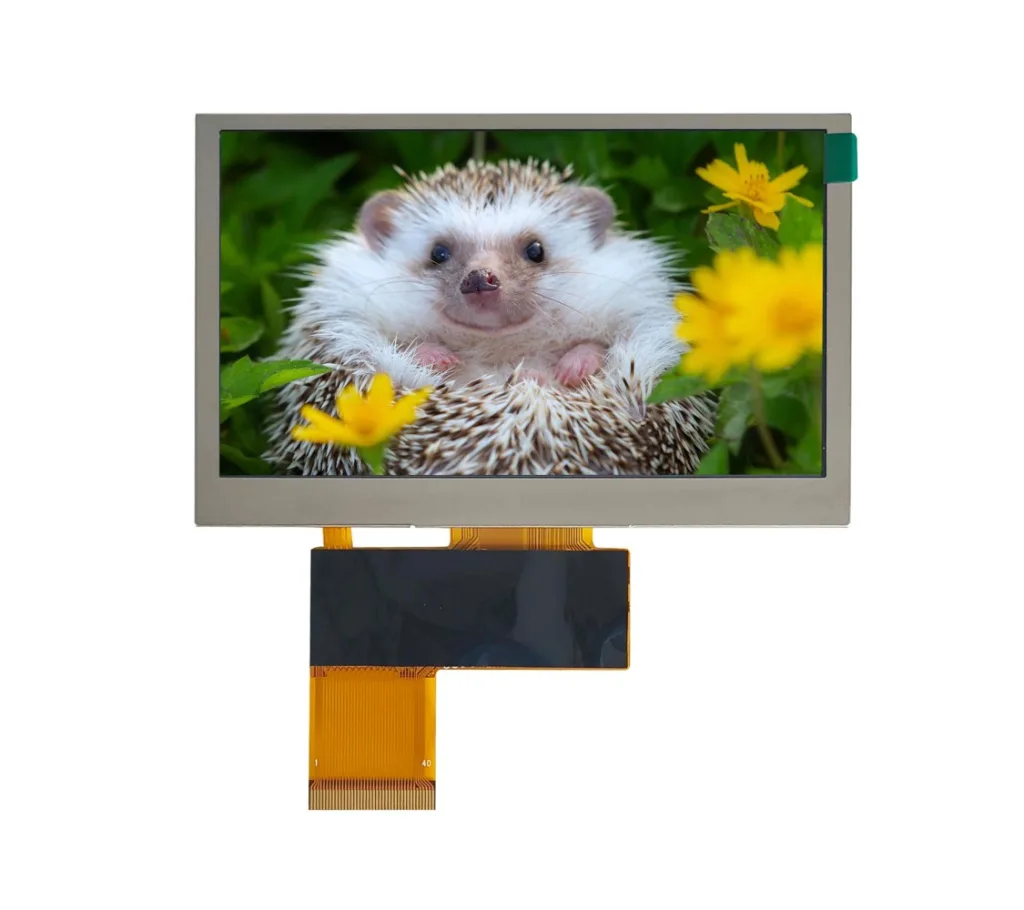
S070QWS145EP-1 – 7.0 inch WSVGA A well-balanced option with 1024×600 resolution and 24ms fast response time. It supports MIPI interface for high-speed data transmission and operates in industrial temperature conditions. The 50,000 hrs backlight lifetime ensures durability, making it ideal for mainstream digital microscopes used in education or inspection.
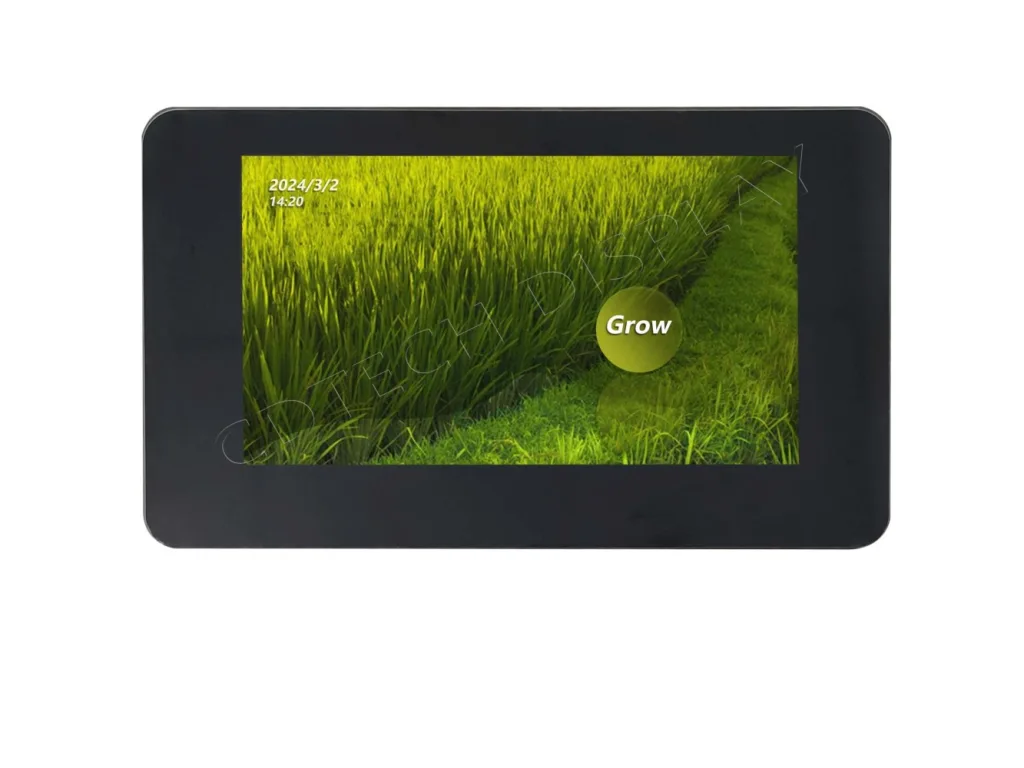
S090BWS05ED – 9.0 inch WSVGA For larger-scale microscopes, this 9.0 inch module provides 1024×600 resolution and 1000 cd/m² brightness. With LVDS interface for superior anti-interference performance, full viewing angles (85/85/85/85), and robust performance, it is designed for laboratory and industrial settings where sharp imaging and collaboration are key.
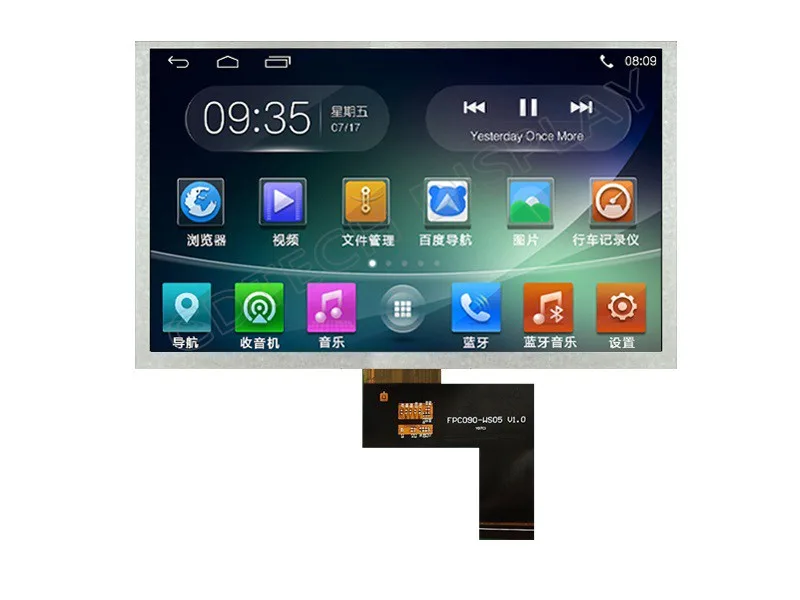
Complete Technical Comparison
| Specification | S043HWV94ES(4.3″) | S070QWS145EP-1(7.0″) | S090BWS05ED(9.0″) |
| Resolution | 800×480 | 1024×600 | 1024×600 |
| Interface | RGB-24bit | MIPI | LVDS |
| Brightness(cd/m²) | 1000 | 1000 | 1000 |
| Contrast Ratio | 800:1 | 1000:1 | 800:1 |
| Response Time | 30+40 | 12+12 | 25 |
| Operating Temperature | 25,000hrs | 50,000hrs | 30,000hrs |
| Viewing Anlge(U/D/L/R) | 80/80/80/80° | 80/80/80/80° | 80/80/80/80° |
| NTSC Color Gamut | 50 percent | 50 percent | 50 percent |
| Dimensions(WxHxD) | 105.5×67.2×2.85mm | 164.26×99.26×5.46mm | 210.7×126.5×5.2mm |
| Ideal Applications | Portable microscopes | Educational/Inspection | Laboratory/Industrial |
Our Display Advantages (Technical Highlights)
Beyond size and resolution, our LCD modules provide several technical advantages:
- High Refresh Rate – 60 fps Most digital microscopes are limited to 30 fps. Our modules support 60 fps for smoother real-time observation, eliminating motion blur during sample manipulation.
- Fast Response Time (TFT optic) With response times as low as 24ms, our displays reduce motion blur and ghosting, ensuring sharper imaging during dynamic observation.
- Color Accuracy – 50 percent NTSC Coverage While 50 percent NTSC coverage provides sufficient color reproduction for most microscopy applications, it ensures consistent and accurate sample color representation for quality control and analysis work. For advanced research or medical applications, higher coverage options are also available.
- IPS Technology for Wide Viewing Angles All our recommended modules feature IPS technology, providing 80–85° viewing angles in all directions. This enables multiple users to collaborate effectively around the microscope without color shift or contrast loss.
- Interface Optimization
- Adjustable Brightness (PWM pinout) Engineers can integrate PWM control to fine-tune brightness for different lighting environments, from dark laboratories to bright industrial settings.
- Touch Screen Compatibility For microscopes running Android or other UI systems, capacitive touch panels become essential. Every module we provide can pair with a responsive touch interface.
- Image Flip (Horizontal/Vertical scan direction) Hardware-level H/V flipping supports optical system compatibility for mirrored or flipped images.
Interface Selection Guide
- Choosing the right interface is crucial for microscope performance:
- RGB-24bit Interface Best for: Entry-level microscopes, cost-sensitive applications Advantages: Simple integration, lower cost, reliable transmission Limitations: Lower bandwidth, suitable for basic display requirements
- MIPI Interface Best for: Real-time observation, high-performance applications Advantages: High-speed transmission, reduced lag, better signal integrity Why faster than USB: Direct parallel data transmission eliminates USB protocol overhead
- LVDS Interface Best for: Industrial environments, electromagnetic interference concerns Advantages: Excellent noise immunity, longer cable runs, stable performance Applications: Factory floor microscopes, harsh environment applications
Small vs. Large Screen: Portability vs. Clarity
User needs vary depending on the application:
- Small screens (4.3 inch) Advantages: Highly portable, low power consumption, compact design Best for: Field inspection, handheld microscopes, battery-powered applications Resolution consideration: 800×480 provides adequate detail for basic inspection tasks
- Medium screens (7.0 inch) Advantages: Balanced portability and clarity, mainstream choice Best for: Educational microscopes, laboratory benchtop units, general inspection Resolution benefit: 1024×600 offers improved detail visibility and user comfort
- Large screens (9.0 inch and above) Advantages: Maximum clarity, best for collaboration, reduced eye strain Best for: Industrial quality control, research laboratories, multi-user environments Professional benefit: Large viewing area enables detailed analysis and team collaboration
At CDTECH, we offer modules across this spectrum, ensuring the right fit for every scenario.
Technical Considerations for Microscope Integration
- Response Time Impact Under 25ms: Smooth real-time observation with minimal ghosting 25–40ms: Acceptable for static observation, some lag during movement Over 40ms: Noticeable lag, frustrating for dynamic applications
- Resolution vs Magnification Relationship Higher resolution displays don’t automatically mean better microscopy: 800×480: Suitable for magnifications up to 200x 1024×600: Optimal for magnifications 200x–500x Higher resolutions: Required for magnifications exceeding 500x
- Color Accuracy Requirements 50 percent NTSC coverage meets most microscopy needs: Sufficient for: Component inspection, educational use, general laboratory work Medical/Research: May require higher accuracy for specific samples Industrial QC: 50 percent NTSC provides consistent color reproduction for defect detection
Frequently Asked Questions
Q: Why choose MIPI over RGB interface for digital microscopes? A: MIPI provides higher bandwidth and lower latency, essential for real-time observation. It reduces image lag significantly compared to RGB, especially when manipulating samples under magnification.
Q: Is 50 percent NTSC color gamut sufficient for microscopy applications? A: Yes, 50 percent NTSC covers the color range needed for most microscopy work including component inspection, educational use, and general lab applications. For advanced research or medical needs, higher coverage modules are available.
Q: Why do larger screens improve microscope usability? A: Larger screens reduce eye strain, enable better detail visibility, and facilitate collaboration. They’re particularly valuable in educational and industrial settings where multiple users need to view samples.
Q: Lead time and Incoterm? A: Sample:2-3 weeks, Exw; MP: 4-5weeks, FCA or FOB.
Conclusion
Digital microscopes succeed or fail based on their display. User feedback shows that lag, clarity, and usability are all defined by the LCD module. By choosing the right display, whether compact RGB for portability, balanced MIPI for performance, or large LVDS for industrial use, you can create microscopes that meet real professional needs.
Key factors to consider:
- Interface choice: RGB for cost, MIPI for speed, LVDS for reliability
- Screen size: Balance between portability and clarity based on application
- Color accuracy: 50 percent NTSC provides sufficient reproduction for most applications
- Viewing angles: IPS technology enables collaborative use
Whether you are building a portable entry-level unit, a balanced educational system, or a high-performance industrial microscope, CDTECH provides the right LCD modules to match your needs. Contact us for datasheets, engineering support, or to request a sample.

 English
  Español
  日本語
日本語  한국어
한국어
Leave a Reply