From the blog
Engineering guides, interface comparisons, and application notes for TFT LCD module selection and integration. Written for hardware engineers, procurement teams, and product designers.
Blog
Latest articles
-
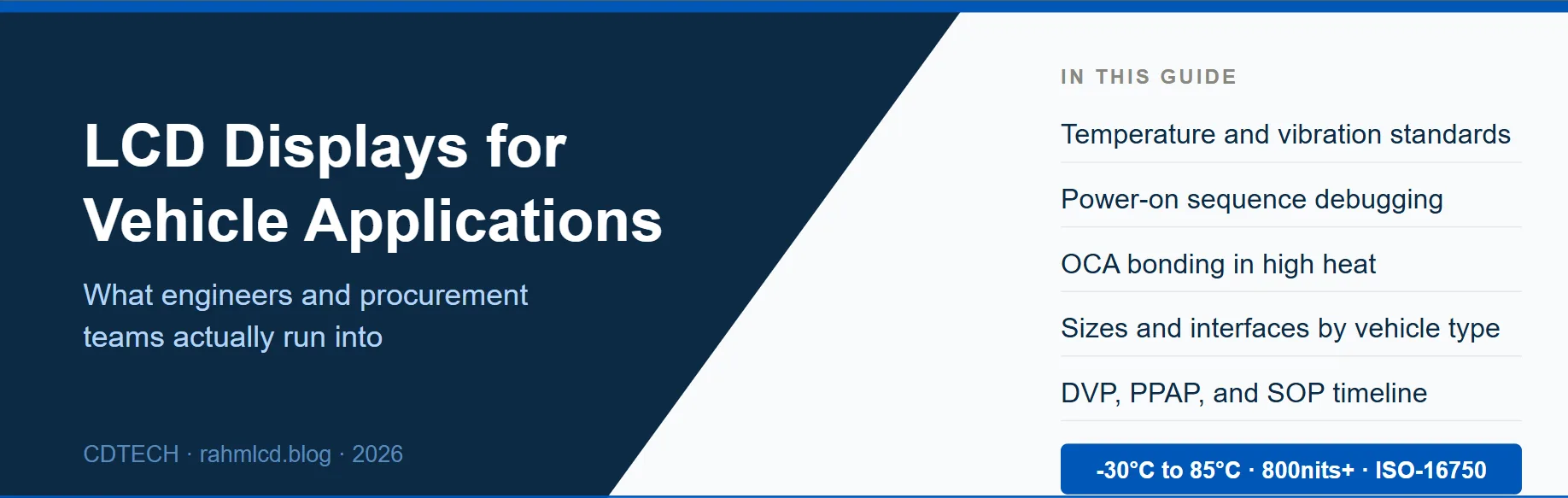
LCD Displays for Vehicle Applications: What Engineers and Procurement Teams Run Into
Vehicle display projects take longer than most engineers expect. The technical requirements are more specific, the certification process is more demanding, and the decision chain…
-
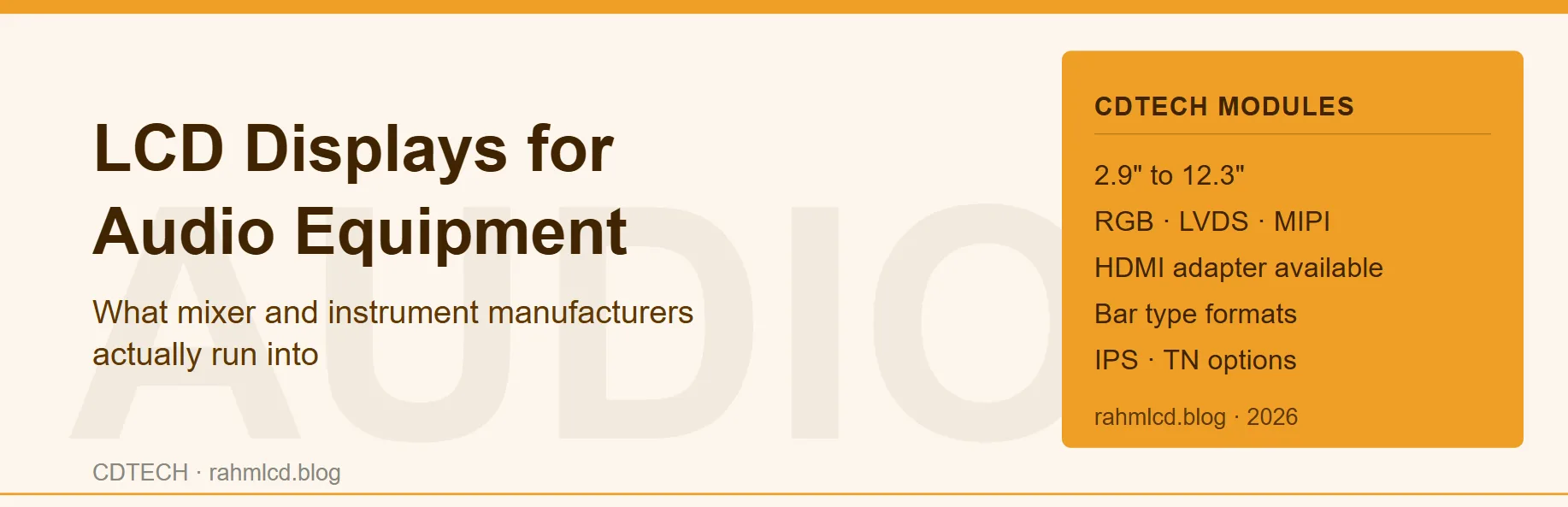
LCD Displays for Audio Equipment: What Mixer and Instrument Manufacturers Actually Run Into
Audio equipment puts a specific set of constraints on display selection that general-purpose embedded display guides do not cover well. The front panel dimensions are…
-
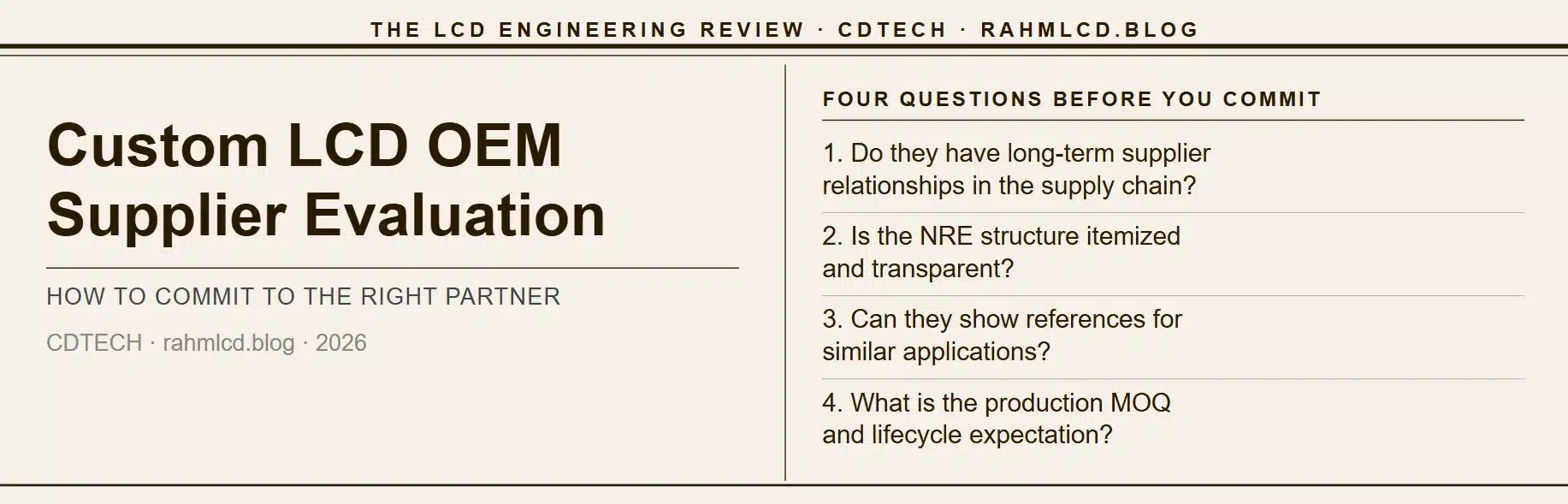
Custom LCD Display: How to Evaluate an OEM Supplier Before You Commit
Most custom LCD display projects do not fail because of bad engineering. They fail because the supplier relationship was not established clearly enough before the…
-
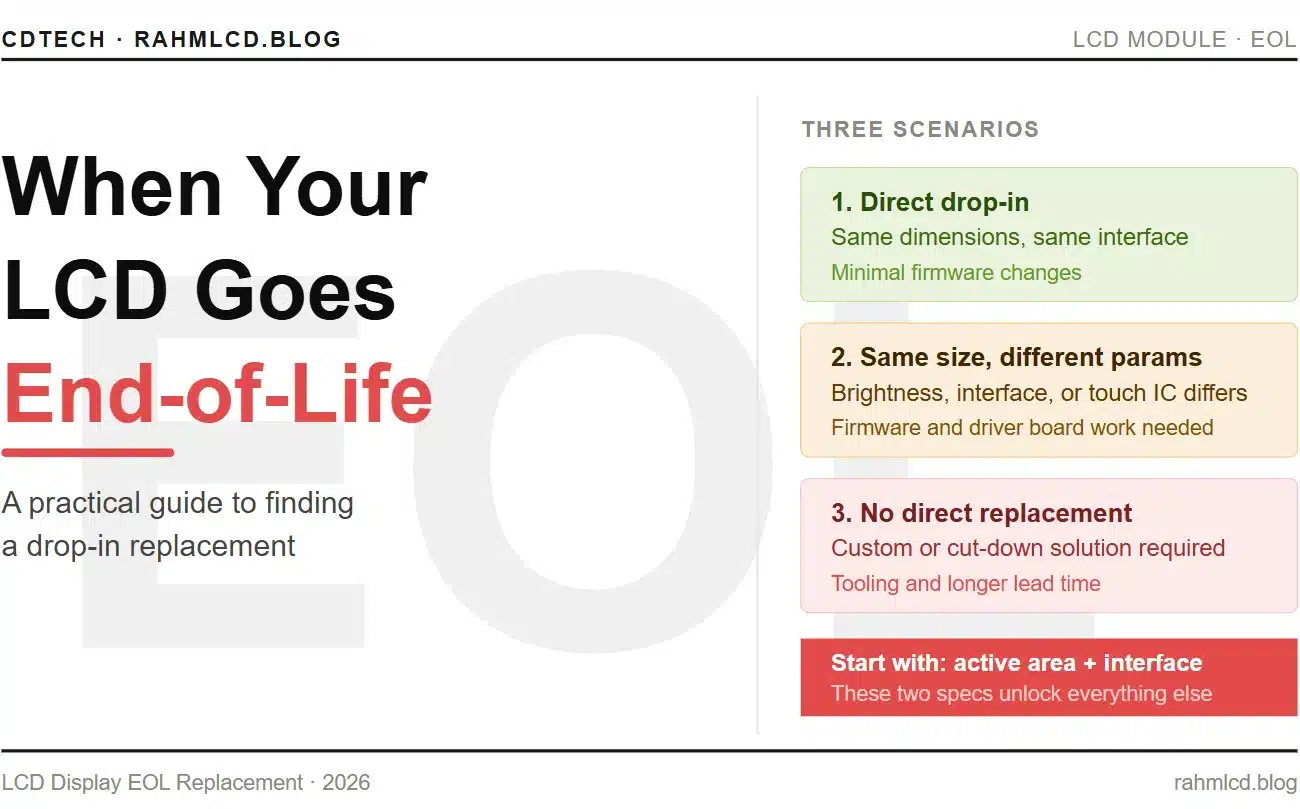
When Your LCD Display Goes EOL: A Practical Guideto Finding a Drop-In Replacement
The notification arrives without much warning. The display module your product has been using for three years is going end-of-life. The panel manufacturer is stopping…
-
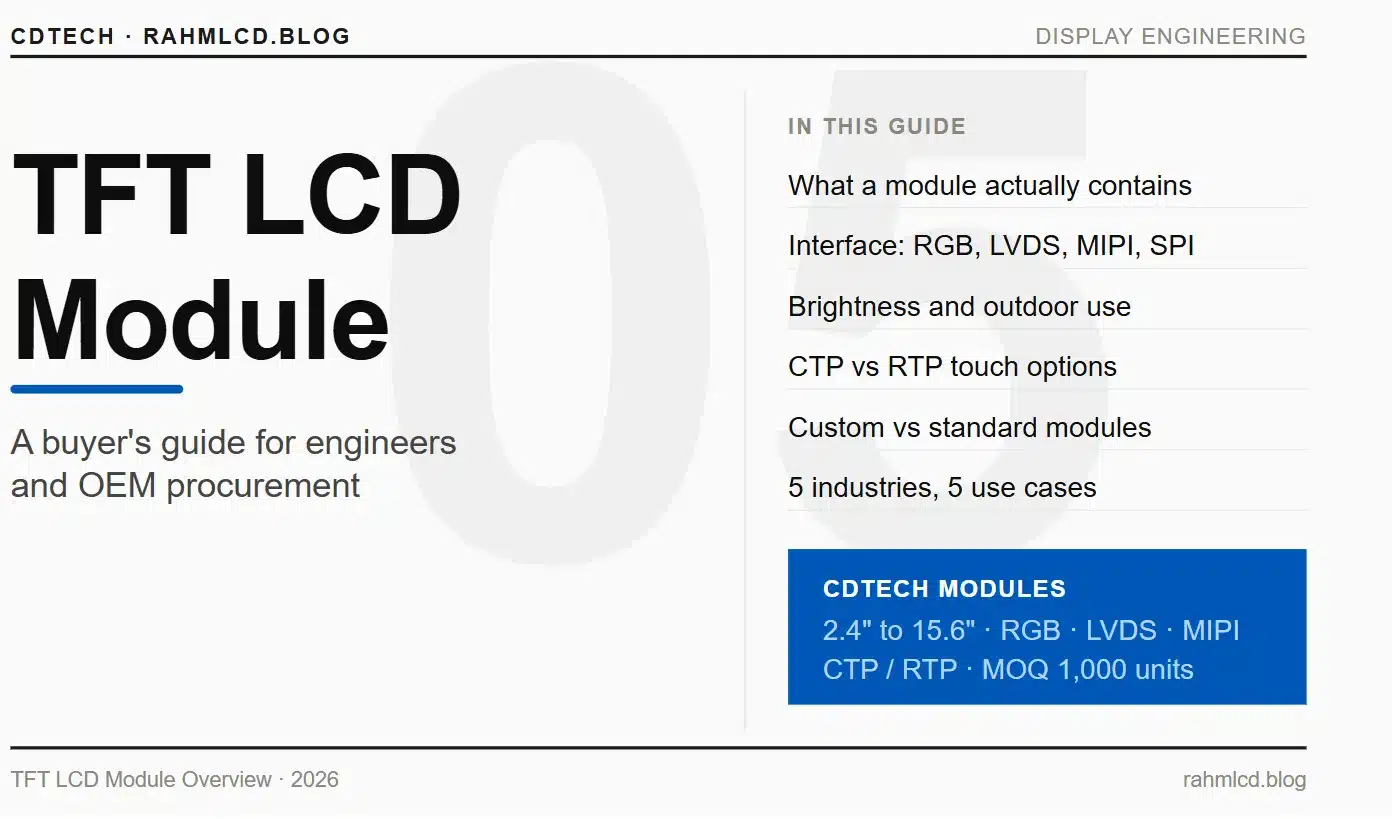
What Is a TFT LCD Module? A Buyer’s Guide for Engineers and OEM Procurement
A TFT LCD module is not a panel. That distinction matters more than it might seem. A bare TFT LCD panel is a component, it…
-
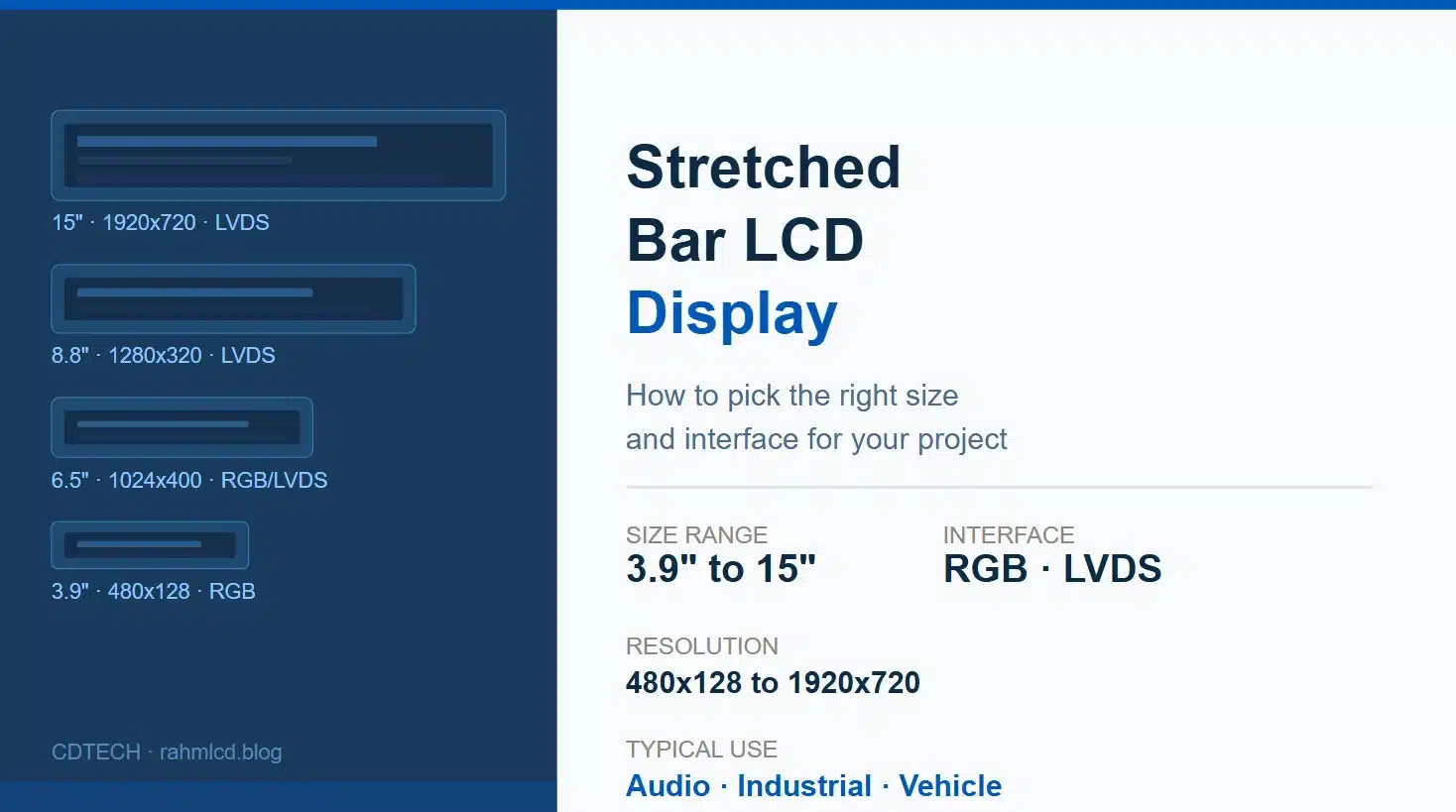
Stretched Bar LCD: A No-Fluff Guide to Picking the Right Size and Interface
A bar LCD display is a stretched-format TFT panel with aspect ratios typically ranging from 3:1 to 8:1, used in audio equipment, industrial HMI, and…
Search
Tags
AQL sampling guide display interface guide driver IC interface industrial LCD interface industrial TFT module LCD interface comparison LCD interface selection LCD module inspection LVDS display module MIPI interface guide MIPI TFT LCD parallel RGB TFT RGB interface RGB vs LVDS TFT LCD interface


 English
  Español
  日本語
日本語  한국어
한국어